
Oral Acne Meds: The Full Picture on Benefits, Side Effects & What to Expect
Considering oral medication for acne? We break down the full picture of oral acne meds, including how they work, side effects, timelines, and who they are best for.

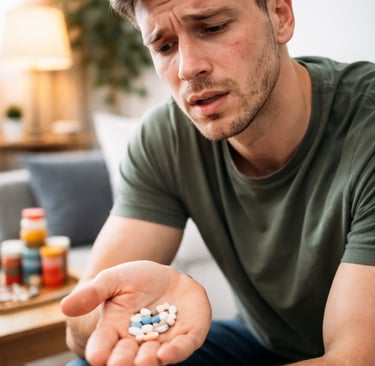
If you’ve been dealing with acne for a while, you know the drill. You’ve probably tried the washes, the spot treatments, and the lotions. Maybe they worked for a bit, or maybe they didn’t work at all. When pimples are persistent, or when they’re deep and painful, it’s usually a sign that the problem isn’t just on the surface. That’s when the conversation with your dermatologist often turns to something stronger: Oral Acne Meds.
The idea of taking a pill to fix your skin can feel like a big step. It sounds serious—and honestly, it is. But for millions of people, oral medications are the thing that finally clears their skin. However, unlike a moisturizer where the worst side effect might be a little greasiness, pills that treat acne work throughout your entire body. That means they come with a full picture of benefits, risks, and real-world considerations.
This article is your guide to that full picture. We’re going to break down the most common oral acne treatments, how they actually work inside your body, what results you can realistically expect, and the side effects you need to know about before you pick up that prescription.
The Root of the Problem: Why Topicals Sometimes Fail
To understand why oral acne meds are so effective, it helps to understand what’s happening beneath the skin. Imagine your pores are like tiny streams. Normally, oil (sebum) flows gently to the surface to keep your skin healthy. Acne starts when that stream gets dammed up.
Under a microscope, we see four main things happening:
Clogging: Your skin cells are shedding too fast or incorrectly, gluing themselves together and blocking the pore opening.
Oil Overload: Your sebaceous glands (the little factories attached to your pores) are working overtime, pumping out too much oil.
Bacteria: That trapped oil becomes a buffet for Cutibacterium acnes, a bacteria that normally lives on your skin but overgrows in clogged pores.
Inflammation: Your body’s immune system notices the clog, the oil, and the bacteria, and sends in its army. This is what turns a small clog into a red, swollen, painful pimple.
Topical treatments are like trying to put out a forest fire with a garden hose. They work on the surface, but they can’t reach the deep oil glands or calm the internal fire of inflammation. Oral acne meds work from the inside out. They travel through your bloodstream to hit the root causes: shutting down oil production, killing bacteria systemically, or calming the inflammatory response.
Category 1: Antibiotics – Calming the Chaos
For many people, the first oral acne meds they’re prescribed are antibiotics. The most common names you’ll hear are doxycycline, minocycline, and sometimes erythromycin or tetracycline.
How They Work: The "Oil Spill" Analogy
Think of your inflamed acne like an oil spill in the ocean. The bacteria are the "oil," and the redness and swelling is the environmental damage. Topical treatments try to clean the beach, but oral antibiotics go after the source of the spill.
Killing Bacteria: They travel through your blood to the hair follicle and directly reduce the amount of C. acnes bacteria.
Anti-inflammatory Power: More importantly, these specific antibiotics have a hidden talent. They don’t just kill bugs; they also calm down the inflammatory chemicals your body releases. This is why you often see redness and swelling go down before the actual pimples disappear.
The Timeline: What to Expect
Oral antibiotics work faster than topicals. You might start seeing results in as little as 3 to 4 weeks. Your dermatologist will usually prescribe them alongside your topical routine. The goal is to get the inflammation under control quickly.
The Downsides: Why They Aren't a Forever Fix
This is where the "full picture" comes into play. Oral antibiotics have significant limitations.
Antibiotic Resistance: This is the biggest concern. If you take an antibiotic for too long, the bacteria on your skin can learn to outsmart it. Once that happens, the drug stops working for you. This is why dermatologists are very careful about how long you stay on them.
Gut Health: Antibiotics are non-discriminatory. They kill the bad bacteria causing your acne, but they also wipe out the good bacteria in your gut that helps you digest food. This can lead to an upset stomach, diarrhea, or for women, yeast infections.
Sun Sensitivity (The Burn Risk): Drugs like doxycycline make your skin extremely sensitive to the sun. A 15-minute walk on a sunny day can result in a severe sunburn.
Long-Term Use: Because of resistance and side effects, antibiotics are generally used as a short-term bridge—usually 3 to 6 months—to get acne under control while longer-term topicals start working.
Who Should Take Them?
You are a candidate if you have moderate to severe inflammatory acne—the kind with red, pus-filled bumps that hurt. If you have mostly blackheads and whiteheads, antibiotics won't help much because they don't unclog pores.
Important Interactions
Dairy: Calcium in milk, yogurt, or cheese can bind to the antibiotic in your stomach, preventing it from being absorbed. You usually need to take these pills on an empty stomach or avoid dairy for a few hours.
Birth Control: Common acne antibiotics like doxycycline have a very low risk of affecting hormonal birth control. Still, always use a backup method if you're unsure.
Iron and Antacids: Similar to dairy, these can block absorption.
Category 2: Hormonal Treatments – Rewiring the Signal
If you’re a woman whose acne flares up around your period or shows up mostly on your jawline and chin, your acne likely has a hormonal driver. This is where oral contraceptives (birth control pills) and spironolactone come in.
The Hormone Explanation: A Simple Analogy
Imagine your oil glands have a volume dial. Androgens, which are male hormones that everyone has, turn that dial UP, telling the glands to produce more oil. For some women, their glands are just super sensitive to normal levels of androgens.
Oral contraceptives work by stabilizing your hormone cycle. They lower the amount of androgens circulating in your body or block them from reaching the gland. Essentially, they turn the volume dial DOWN on oil production. It takes time—usually 3 to 6 months—for your body to adjust and for the skin to reflect the lower oil levels.
Spironolactone: The "Anti-Androgen"
This is a medication originally designed for high blood pressure, but dermatologists discovered a happy side effect: it clears acne.
How it works: It’s an androgen blocker. It sits on the receptor of the oil gland and physically blocks the male hormone from plugging in and turning the dial up.
Who it’s for: Adult women with hormonal acne.
Not for men: Men cannot take spironolactone for acne because blocking androgens can cause side effects like breast tenderness or growth (gynecomastia).
Side Effects to Watch For
Because spironolactone is a diuretic (water pill), its main job is to get rid of excess fluid.
Frequent Urination: You’ll likely pee more often.
Dizziness/Low Blood Pressure: Since it lowers blood pressure, you might feel lightheaded if you stand up too fast. You need to stay hydrated.
Potassium Levels: It can cause potassium levels to rise, so your doctor might check your blood work periodically and advise against eating massive amounts of potassium-rich foods like bananas.
Who Should Consider This?
If you are a woman with cyclical breakouts, or if your acne persists into your 20s and 30s despite good topicals, these options are worth discussing with your doctor. They are generally very effective for the right patient.
Category 3: Isotretinoin (Formerly Accutane) – The Heavy Hitter
If acne is a fortress, isotretinoin is the nuclear option. It’s the closest thing we have to a "cure" for acne. It’s used for severe, cystic acne that scars, or for moderate acne that just won't respond to anything else.
How it Works: Shrinking the Factory
Remember the oil glands attached to your pores? Isotretinoin actually shrinks them. It also normalizes how your skin cells shed, making it harder for pores to clog, and it reduces bacteria and inflammation. It targets all four causes of acne at once. No other medication does this.
The Full Picture: Life-Changing Results with Serious Rules
Isotretinoin is powerful, and because it’s powerful, it has a long list of requirements.
Effectiveness: It works incredibly well. After a standard 5-6 month course, most people have clear skin, and for many, it stays clear permanently.
The Drying Effect: Because it shrinks oil glands, every mucous membrane in your body dries out. Expect brutally chapped lips, dry eyes, nosebleeds (from dry nasal passages), and dry skin all over.
Blood Work: You must get monthly blood tests to monitor your liver and cholesterol levels, as the meds can affect them.
The iPledge Program and Black Box Warning
Isotretinoin carries a Black Box Warning—the strictest warning from the FDA—because it causes severe, life-threatening birth defects. If you can become pregnant, you cannot take this medication without using two forms of birth control.
Mental Health
There has been ongoing discussion about isotretinoin and mood changes. Some people report feeling sad or depressed. While a direct cause isn't proven, it’s a real-world consideration. Derms take this seriously; if you feel your mood changing, you stop the meds immediately and talk to your doctor.
Who Should Consider This?
If you have deep, painful cysts that leave scars, or if you’ve tried everything else and nothing has worked for years, isotretinoin is a valid option. It requires commitment, but the results are often life-changing.
Lifestyle and Diet: Supporting Your Medication
While oral acne meds do the heavy lifting, what you do in real life matters. This isn't about "curing" acne with a juice cleanse; it's about not sabotaging your expensive medication.
The Glycemic Index Connection
High-sugar foods and refined carbs (white bread, chips, soda) spike your insulin. High insulin can, in turn, tell your oil glands to rev up production. While diet alone doesn't cause acne, a diet high in sugary foods can make acne worse for some people, potentially counteracting your meds. Focusing on whole foods like vegetables, protein, and complex carbs is a solid, evidence-based choice.
The Physical Side
Don't Pick: This is non-negotiable. Picking turns a small spot into a deep wound and a permanent scar. Your medication is working to heal you from the inside; don't undermine it from the outside.
Gentle Cleansing: If you’re on drying meds like isotretinoin or strong antibiotics, your skin barrier is fragile. Use a gentle, hydrating cleanser and a heavy moisturizer. Harsh scrubs will only cause damage.
Sun Protection is Mandatory: As mentioned, many oral acne meds cause photosensitivity. A good mineral sunscreen (zinc oxide or titanium dioxide) isn't just for aging; it's to prevent chemical burns.
Pros and Cons at a Glance
Antibiotics
Pros: Fast-acting on inflammation; widely available.
Cons: Can't use long-term; gut issues; sun sensitivity; risk of resistance.
Hormonal (Pill/Spironolactone)
Pros: Targets the root hormonal cause; can be used long-term.
Cons: Only for women (spironolactone); takes months to work; possible menstrual changes or blood pressure issues.
Isotretinoin
Pros: Highest success rate; treats all causes; potentially permanent results.
Cons: Strict monitoring; mandatory birth control (for women); significant dryness; blood work required.
The Verdict: Finding Your Full Picture
Oral acne meds are not a sign that you "failed" at skincare. Acne is a medical condition, and sometimes the pharmacy shelf isn't equipped to handle it. The "full picture" means understanding that these are powerful tools that work, but they work best when you are an informed partner with your dermatologist.
You need to ask questions. Ask about the timeline. Ask about the side effects. Ask about how it fits into your life—whether that means avoiding the sun, carrying lip balm 24/7, or remembering to take a pill with food.
The right oral medication can do more than just clear pimples. It can stop the pain, prevent the scars, and lift the mental weight that acne carries. By knowing the full picture—the benefits, the drawbacks, and the real-world implications—you can make a decision that’s not just about clear skin, but about your health as a whole.